 Horse Country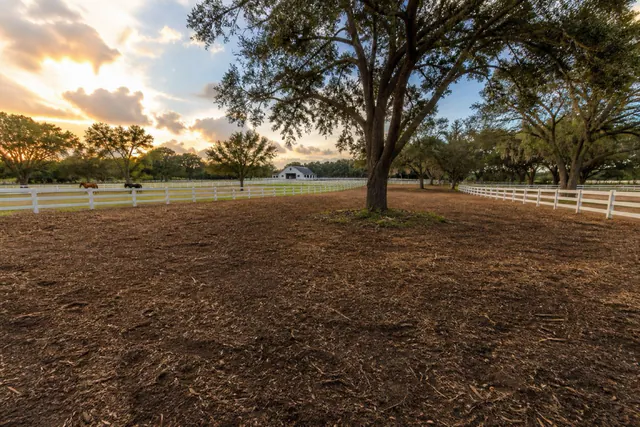
Horse Country Clearing puts Parkland property owners in touch with a local land clearing contractor who takes on mulching, clearing, and exotic removal across the Parkland area.
Parkland is Davie's mirror at the other end of the county: 34,670 residents at the 2020 Census, a name that reflects its original park-like zoning, and — in the Ranches section especially — the same board-fence equestrian culture that this site is named for. It was also among Broward's fastest-growing cities through the 2010s, which means its clearing work splits between new-estate site prep and the ongoing curation of multi-acre properties.
Estate work here is landscape-scale decision-making. A two-to-five-acre parcel gets cleared as a composition: paddocks and lawns opened up, the best live oaks kept as shade islands with their root zones fenced off during work, exotic infiltration — pepper, earleaf acacia, old melaleuca survivors — extracted from the canopy line, and sight lines cut so the barn, the house, and the gate all see each other.
The equestrian specifics carry over from Davie practice wholesale: machine schedules coordinated around turnout, mulched surfaces checked before hooves return, fencing corridors left clean enough to ride, and arena and paddock grading done to horse-first tolerances. North county or central, ranch ground is ranch ground.
Curating oaks on estate ground
Parkland's mature live oaks are the county's best argument for selective clearing — irreplaceable on any human timescale, and protected accordingly under local tree rules administered alongside Broward's environmental programs. Estate clearing treats them as fixed capital: drip-line barricades during machine work, no grade change over root plates, and understory removal done by mulcher at a respectful standoff with hand finishing inside the sensitive radius.
The composition payoff is real: a cleared paddock wrapped around a preserved oak island reads instantly as established estate ground — and appraises like it.
Acreage mulching on the wetland fringe
Western Parkland runs toward the same Everglades-fringe conditions as western Davie: seasonally wet ground, melaleuca legacy stands, and drainage that answers to the regional system the South Florida Water Management District manages. Multi-acre mulching jobs here get planned around the water table — tracked machines in the dry months for the low ground — and melaleuca removal follows the seed-aware sequencing in UF/IFAS's melaleuca control guide.
For owners expanding paddocks westward, the honest advisory is drainage first: ground that grew melaleuca will show you why once the trees are gone, and budgeting the grading pass alongside the clearing pass saves a second mobilization.
Further reading
Worth knowing first
Do you handle multi-acre estate clearing in one project?
Yes — Parkland-scale parcels are quoted as phased compositions: mulching acreage, extraction zones, keeper-tree protection, and grading, each priced and sequenced so the property stays functional throughout.
Can a paddock expansion happen with horses in residence?
Routinely — the work zone is fenced off from stock, turnout rotates to the far fields during machine hours, and no new ground opens to horses until it's been walked and cleared of stubs and debris.
What's the going rate for acreage clearing in Parkland?
Mulching-dominant acreage work prices like Davie's — density-driven, with published South Florida mulching figures starting in the hundreds per acre and climbing past four figures in heavy growth, and extraction and grading extra. Estate quotes itemize by zone so you steer the budget.
The previous owner planted melaleuca as a windbreak — priority problem?
A seeding one, yes: every year it stands, it plants the neighborhood. Phased removal with native replacement — slash pine and live oak do the same wind job — is the standard fix, sequenced so screening never fully drops.
Can you match the clearing style of neighboring Ranches properties?
The Ranches look — open pasture, oak islands, clean fence corridors — is exactly the estate-clearing playbook. It's the local vernacular this work exists to produce.