 Horse Country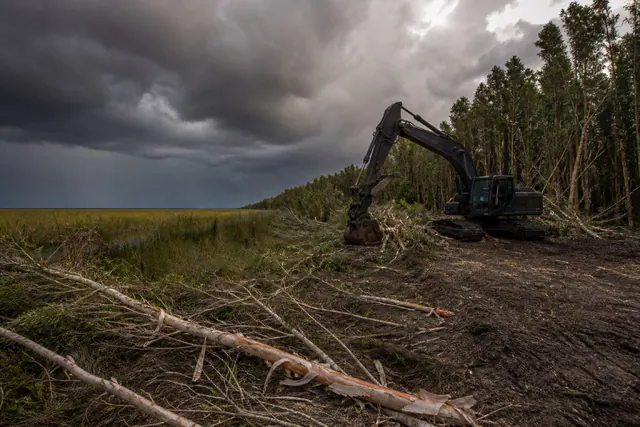
Horse Country Clearing puts Davie property owners in touch with a local land clearing contractor who handles melaleuca removal on Davie and Broward County ground.
West of Davie, where ranchette country runs out toward the sawgrass, the horizon is still walled in places by melaleuca — a paper-barked Australian tree brought to Florida in the 1880s and later broadcast across the wetlands in a scheme to dry them for development. It worked horrifyingly well. Melaleuca forms stands so dense you cannot walk between trunks, and one tree under stress can shed seed by the million.
That seed behavior is the whole strategy of removal. Melaleuca holds years of seed in capsules on the branch, and stress — fire, frost, or a careless first cut — triggers release. Professional removal fells and processes trees in a sequence that keeps capsules cool and contained, grinds or hauls the material, and then returns for the seedling flush that follows any disturbance. Skip the follow-up and you've traded a stand of trees for a carpet of ten thousand seedlings.
For a Davie owner, the payoff is real acreage back. A quarter-acre melaleuca pocket is a quarter acre of pasture, paddock, or homesite that currently grows nothing else — the stands are near-monocultures, hostile even to Florida's adaptable wildlife. Clearing them is one of the few land projects that is simultaneously self-interested and a public service.
A century-old mistake, still being corrected
Melaleuca quinquenervia reached Florida around 1887 and by the mid-1990s had infested roughly half a million acres of the South Florida landscape — the history and control chemistry are laid out in UF/IFAS's landowner guide to controlling melaleuca. Regional agencies have beaten it back from much of the public wetland system, which makes the remaining private-parcel stands — like those on Broward's western fringe — the current front line. The Ask IFAS melaleuca hub collects the ongoing research.
Because the tree was planted to drain wetlands, removing a stand can genuinely change how a parcel holds water. Expect the cleared ground to run wetter in the summer than it did under the trees, and plan grading or fill accordingly — a point worth raising during the quote walk.
Getting the sequence right on removal day
The working order on a Davie melaleuca job: assess seed load first, fell toward the interior of the stand, process trunks where they drop, and stage material so capsule-bearing tops are ground or hauled rather than left to cook open in the sun. On parcels bordering canals or wet prairie, silt control comes first — the same drainage network the tree once threatened is managed today by the South Florida Water Management District — clearing crews plan around that system as a matter of course.
Then comes patience: one or two seedling sweeps over the following year, cheap and quick, that convert a good clearing job into a permanent one. A contractor who quotes melaleuca without mentioning follow-up is quoting half the job.
Further reading
Worth knowing first
How can I tell whether my western tree wall is melaleuca?
Look for soft, whitish bark that peels in paper layers, narrow leaves that smell faintly of camphor when crushed, and bottlebrush-style white flowers. If your western fence line has a wall of identical pale trunks packed tight, that's almost certainly it.
Why is melaleuca removal quoted differently than tree removal?
Because it's invasive-species work, not arboriculture: the price covers seed-aware felling order, containment of capsule material, and the seedling follow-up — not just dropping trunks.
Can I burn cleared melaleuca on site?
Burning is the worst option — heat pops the seed capsules and broadcasts the next generation, and open burning near Davie homes runs into fire rules anyway. Grinding and hauling are the responsible paths.
Will removing melaleuca make my land wetter?
Sometimes noticeably, yes — mature stands transpire a lot of water. Low corners that stayed dry under the canopy can hold seasonal water afterward, which is why melaleuca projects often pair with grading or fill work.
Is there any reason to keep a melaleuca stand?
As a windbreak it's tempting, but it's a windbreak that seeds your land and your neighbors' land forever. Replacing it in phases with natives — slash pine, wax myrtle, cypress on wet ground — keeps the screen without the invasion.