 Horse Country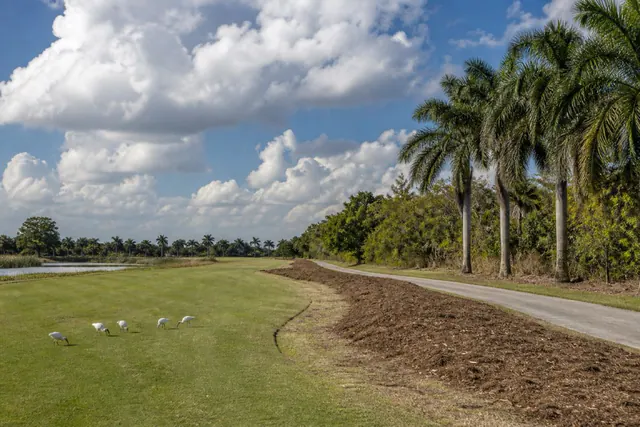
Horse Country Clearing puts Tamarac property owners in touch with a local land clearing contractor who takes on mulching, clearing, and exotic removal across the Tamarac area.
Tamarac, 71,897 residents at the 2020 Census, grew up around golf — a lattice of courses, canals, and mature communities built from the late 1960s on. Its clearing work is the renovation of that landscape's edges: buffers between fairways and back patios that have thickened into walls, canal margins gone feral behind the cart paths, and common-area plantings that outlived their design by decades.
Buffer work is the local art form. The original plantings — ficus, carrotwood, seagrape, punk trees from the era when nobody knew better — have merged with volunteer pepper into corridors thirty feet deep. The renovation thins rather than levels: keeper canopy stays for shade and ball-stop function, invasives and deadwood come out, and the understory drops to a maintainable height that restores the breeze and the sight lines that sold these homes in the first place.
Communities and course operators both benefit from the same pass. For HOAs it's property values and patio views; for golf operations it's playability, turf air circulation, and fewer post-storm surprises hanging over greens. The work schedules around play and around residents — early machine windows, cart-path load-outs, and no windrows left where a tee shot can find them.
Punk trees and the legacy exotics of the golf era
Tamarac's vintage landscaping is a museum of good intentions: melaleuca — locally 'punk trees' — planted ornamentally before its invasiveness was understood, plus carrotwood and ficus from the same catalogs. The melaleuca file is well documented in UF/IFAS's property owner's control guide, and removal in buffers follows its seed-aware logic — cut and clear without giving the canopy a stress signal to reseed the fairway. The broader research stream lives at the Ask IFAS melaleuca hub.
Replacement planting leans native where screening must persist — live oak, dahoon holly, cocoplum — chosen so the buffer's next fifty years need pruning, not machines.
Canal margins behind the cart paths
The canals threading Tamarac's courses are working drainage, part of the county-wide network that answers to the South Florida Water Management District's flood-control mission, and their margins need periodic honest clearing: woody growth off the banks, grass cover preserved, and nothing — chips, trunks, spoil — introduced to the channel. Machine access along cart paths makes course-adjacent margins efficient runs.
Storm readiness is the quiet scheduling driver. Buffer deadwood and over-extended canopy become airborne inventory in a hurricane, and associations that thin before the season the National Hurricane Center tracks spend less after it — reliably.
Further reading
Worth knowing first
Can clearing work happen without closing the course?
Yes — buffer and margin work sequences hole by hole with the pro shop, runs early-morning machine windows, and keeps windrows and equipment clear of play. Courses stay open; golfers mostly notice the improved sight lines afterward.
Our community's buffer blocks the breeze but we want privacy — can both survive?
That's exactly what thinning is: canopy and screening retained, tangle and invasives removed, understory height set to spec. The result reads as parkland, not clear-cut.
Who pays when the buffer sits between the HOA and the course?
Whatever the governing documents say — commonly a shared arrangement. Practically, one crew quoting the whole corridor with a cost split beats two crews meeting at an invisible line.
Are the old punk trees really worth removing if they're not bothering anyone?
They're seeding the county from your buffer even when they look benign, and they fail badly in wind. Phased removal with native replacement is the standard recommendation, urgency rising with proximity to structures and greens.
What's the cost scale for association buffer renovation?
Priced by corridor length and density class after a walk — thinning runs below clear-and-grub since less material moves. Phasing across budget years is normal and works fine.