 Horse Country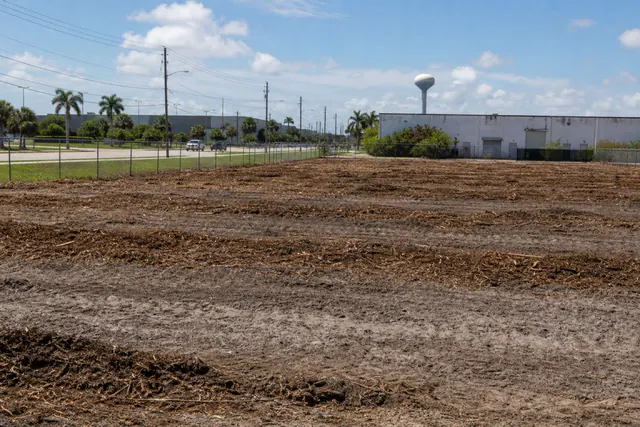
Horse Country Clearing puts Pompano Beach property owners in touch with a local land clearing contractor who takes on mulching, clearing, and exotic removal across the Pompano Beach area.
Pompano Beach — 112,046 residents at the 2020 Census, second in the county — is deep into a redevelopment cycle, and its clearing demand shows it: vacant infill parcels along the arterials being readied for sale or construction, industrial-district perimeters grown shaggy, and code-compliance cleanouts on land that sat fenced and forgotten through a market cycle or two.
The vacant-parcel job is the city's signature. A fenced commercial lot that spent fifteen years idle accumulates a full succession — grasses, then pepper and castor bean, then genuine trees — plus the dumped tires and mattress inventory that vacant urban land attracts. Clearing it to a documented, mowable, marketable condition is one mobilization: mulch or extract the vegetation, separate and manifest the solid waste, and leave grade and sight lines a broker can photograph.
Industrial and warehouse perimeters run as maintenance contracts more than one-offs: fence corridors, rail-spur edges, and retention areas held to spec on a cycle, with after-hours scheduling around operations. It's unglamorous linear work that keeps security cameras seeing, storm water moving, and fire inspectors satisfied.
Clearing for sale, lease, or entitlement
Most Pompano parcel cleanouts serve a transaction — and the details serve it too: documented disposal, dated photo sets, and a finish condition matched to purpose, whether that's 'mowable for listing' or 'rough-ready for the civil contractor.' Where redevelopment brings environmental screening into play, tree and habitat questions route through Broward County's natural resource programs, and a clearing crew that maps protected trunks versus removable exotics before quoting keeps the closing calendar intact.
Long-idle parcels near water features add the standard controls — silt fence before disturbance, swales left functional — consistent with the county's drainage frameworks under the South Florida Water Management District.
Corridor visibility and the economics of maintained edges
On a six-lane arterial, vegetation is a business variable: overgrowth hides signage, shelters dumping, and reads as vacancy even when the business inside is thriving. Perimeter cycles — a mulching pass every year or two, quoted by the linear foot — cost less annually than a single rescue clearing, which is the same cycle-economics argument that governs utility corridors everywhere. Species pressure is constant; the regional invasive context is cataloged by the Florida Invasive Species Partnership.
Storm season doubles the argument on commercial ground: unmaintained perimeter trees become inventory-damaging, operations-stopping debris in a hurricane, and the pre-season trim is the cheapest insurance line a facilities budget carries — the National Hurricane Center's calendar sets the deadline.
Further reading
Worth knowing first
Can you quote a fenced vacant parcel without interior access?
A drive-by plus aerial imagery gets you a budget range; the firm number follows a gate-open walk, because what fifteen idle years hide — dump volume, slab remnants, protected trunks — moves the price.
Do you handle the dumped junk as well as the vegetation?
Yes — separated, hauled to the right facilities, and manifested where the transaction needs paper. On long-vacant Pompano parcels, the junk line is quoted alongside the green line as a matter of course.
What condition satisfies a code-enforcement vegetation citation?
Whatever the citation specifies — typically growth below a set height and sight triangles restored. Clearing to a maintainable condition with dated photos closes the loop; adding a maintenance cycle prevents the sequel.
Can perimeter work run without interrupting our operations?
That's the norm — early mornings, weekends, and section-by-section scheduling around gates, trucks, and shifts. Industrial clients mostly notice the work by its absence of disruption.
How fast can a one-acre commercial parcel be cleared?
Vegetation-only, often two to four working days including hauling; heavy dumping or grubbing extends it. Schedules firm up at the walk, and phased clears for phased closings are routine.